
Best Twilio Flex Alternatives: 6 Options for Teams (Especially Those That Text)
"I'd love to have a front end for Twilio", a developer at a marketing agency recently told me.
"I did all the hard bits," he said. "Phone line and chat config, IVR setup, carrier registration for SMS, webhooks, API connections… but it's our ops people. They don't like the Flex dashboard. They keep complaining they can't do anything, especially with SMS."
This is the gap that a lot of operations teams fall into with Twilio Flex.
Flex is powerful. It's a programmable cloud contact center, but developers configure and maintain it. Think about the teams running actual day-to-day operations over SMS:
- Dispatchers coordinating drivers.
- Staffing teams reaching out to candidates and employees.
- HR pushing shift and staff updates.
- Multi-location or multi-department teams texting for sales and customer support.
They all need one shared inbox to route, organize, and reply to conversations, all on your existing Twilio numbers.
Search "Twilio Flex alternatives," and you mostly hit contact-center replacements. But the truth is, your teams may not need one at all.
So in this article, I cover:
- What Twilio Flex is and what it actually costs
- Why operations teams start looking for alternatives
- The two kinds of Twilio Flex alternatives, and how to tell which one you need
- The best option if your people on your team primarily use SMS
- A full roundup of the alternatives, including contact centers for teams that need one
By the end, you'll know which bucket you're in and which tool fits.
If you're the one who set up Twilio to text and got stuck maintaining infrastructure for your ops people, keep reading.
Flex is overkill if your team just needs texting

Key Takeaways
- The best Twilio Flex alternative for an SMS-only team is a shared SMS inbox. One that connects to your existing Twilio numbers, not another contact center.
- Twilio Flex is a programmable cloud contact center built for developers. If you stood it up primarily to text, you're maintaining far more than needed.
- There are two kinds of Twilio alternatives.
- Need voice, IVR, and workforce management? Pick a full contact center: Amazon Connect, Talkdesk, Genesys Cloud CX, NICE CXone, or Five9.
- Pick an SMS-first team inbox if the main job-to-be-done is texting.
- Twilio hasn't discontinued Flex. But its components keep reaching end of life on Twilio's schedule, so you migrate on their timeline, not yours.
- MessageDesk connects to your existing Twilio numbers through Event Streams in minutes. The whole team gets a shared SMS inbox, with no code.
What Is Twilio Flex?
Twilio Flex is a programmable cloud contact center platform that runs voice, SMS and MMS, chat, email, and video. Engineering teams use it to build custom contact centers, controlling the routing logic, the agent interface, and every channel. It's most common in mid-market and large enterprise organizations with in-house developers.
The key word is programmable. Flex ships as a framework, not a finished product.
Some teams even run a self-hosted Twilio Flex setup for full control over the build. That control is the point, and also the burden.
Twilio Flex isn't a turnkey call center (batteries not included). You get the building blocks and the joyful job of assembling them.
That's a feature-add when you have engineers and complex requirements. But it's a burden if all you needed was a shared team inbox.
{{twilio="/media"}}
Twilio Flex Use Cases
Teams use Twilio Flex to build custom contact centers. These handle customer conversations across voice, SMS, MMS, chat, email, and WhatsApp. Engineering teams use it when they need full control over call routing, agent interfaces, and channel connections.
Here's where Flex earns its keep:
- Inbound customer support: Route incoming voice calls and messages to the right agent with IVR menus, queues, and skills-based logic.
- Outbound calling and sales: Power and predictive dialing for teams running high-volume outbound calling campaigns.
- Twilio Flex outbound SMS: Send notifications, alerts, reminders, and two-way replies programmatically at scale. This is the Twilio Flex SMS use case most operations teams originally came for.
- Omnichannel customer journeys: Stitch voice, SMS, WhatsApp, chat, and email into one thread. The customer journey doesn't restart when the channel changes.
- Blended agent teams: Twilio Flex teams that handle calls and texts from a single console, with custom routing between them.
Notice the pattern. Most of these are voice-led or full omnichannel jobs. They genuinely earn the build.
But one use case on that list doesn't: SMS on its own.
Say your team's real job is texting: dispatch updates, candidate outreach, shift confirmations, customer service over SMS. Then you're standing up a programmable contact center to use a fraction of what it does. That's the moment the build stops paying for itself.
That's also the question the rest of this post answers: when is Flex the right tool, and when is a shared SMS inbox the better fit?
Twilio Flex Pricing & Cost
Twilio Flex has two main pricing options. Twilio bills around $1 per active user hour, only while a user is logged in. The flat plan runs around $150 per named user per month.
New accounts also start with 5,000 free active user hours. It's a sort of Twilio Flex trial, and you can book a Twilio Flex demo through Twilio's sales team.
But here's the part that catches SMS teams off guard. The platform fee is only the platform.
On top of that, you pay for:
- Voice minutes.
- Per-message SMS rates.
- A2P 10DLC compliance fees.
- Data storage and call recording.
- Any custom development to build features Flex doesn't ship.
There's also a Twilio Flex Fair Usage Policy that caps the included Twilio products. For higher-volume teams, that inevitably becomes a real surprise.
Those add-ons are the hidden fees that make Flex cost more than the sticker.
For a team running SMS at volume, the per-active-user-hour model is where costs compound fastest.
Competitors like Ringly and bluetweak talk about the same top reason to leave: "unpredictable usage pricing."
They're not wrong about the problem. But they're just trying to sell you another contact center as the fix.
Why Teams Look for Twilio Flex Alternatives
Read enough Twilio Flex reviews on G2 and Reddit, and the same complaints come up over and over. They hit Twilio Flex SMS teams (dispatch, staffing, HR, field service, multi-location) hardest. And they usually land on one person first: the developer who built the thing.
1. Every change goes through a developer
Once you've built on Flex, you own every change to it. Routing rules, auto-responses, a new line, message assignment: all code.
One retail operator I talked to set up Twilio Flex for automated texts. He stayed stuck on it for one reason, in his words: "the plugins I'm using are integrated with Twilio."
2. There's no shared inbox until you build one
Flex is a framework. First you build the team inbox where anyone can see, assign, and reply. Then you rebuild it every time Twilio ships a new Flex version.
3. Per-hour costs don't scale predictably
They're manageable at low volume, but they compound fast with more active users, longer hours, and higher throughput.
4. Compliance stays on your plate
Twilio provides the infrastructure. It doesn't help you complete 10DLC registration, or manage your opt-outs, or your documentation. That's a job with its own failure modes.
5. You ride Twilio's version and end-of-life cadence
You track component deprecation dates and migrate on Twilio's schedule, not your own. More on that next, because it's the timeliest reason of all.
A few teams also weigh platform risk. Twilio has been through rounds of layoffs and cost-cutting in recent years. Some buyers factor that into a long-term bet on Flex.
One more pattern shows up. Teams already paying Twilio resent paying again on top of it.
As one operations lead put it,
"I'm already paying Twilio. A lot of places out there want to charge us on top of that."
Is Twilio Flex Being Discontinued?
No, Twilio Flex isn't being discontinued. Twilio still ships Flex UI 2.x and was named a Leader in the 2025 Gartner Magic Quadrant for CPaaS. But specific components do reach end of life on a rolling schedule, so teams migrate on Twilio's timeline.
Twilio Flex end of life isn't a single event. The recent dates make the point.
Legacy Flex SSO reached end of life on January 15, 2026. The SSO URL migration to enhanced SSO was due by March 31, 2026. Programmable Chat in Flex reached end of life on June 1, 2026, pushing affected teams to migrate to Flex Conversations.
Older Flex UI 1.x is no longer supported, so teams still on it face a Twilio Flex 2.0 migration to stay current.
None of that means Flex is dying. It just means Flex is a maintenance treadmill.
And here's the turn for an SMS focused team. Say you only ever used Flex to text: why keep maintaining a contact center you never needed?
You can point your Twilio numbers at a shared inbox instead, keep the numbers, and skip the migration (more on this below).
Two Types of Twilio Flex Alternatives
Twilio Flex alternatives fall into two buckets. The one you need depends on what you manage the most: calls or texts:
- A full contact center (CCaaS) if you need voice routing, IVR, dialers, and workforce management. This is for teams that genuinely run voice operations at scale.
- An SMS-first team inbox if you set up Twilio for texting. You get shared visibility without the engineering overhead.
What's interesting is that even mid-sized and larger enterprise teams land in bucket two. They set up Twilio to send and receive texts. The contact center wasn't even the immediate goal.
However, the contact-center options in bucket one are real (and powerful). I expand on them further down. But if shared SMS is the core need, they most likely won't fit in the same way a purpose-built inbox does.
The Best Twilio Flex Alternative for SMS-First Operations Teams
If the people on your team mostly text, the best Twilio Flex alternative is MessageDesk.
Picture the operations teams that actually fit:
- Dispatch and logistics coordinating drivers who can all see and answer from one number.
- Staffing agencies texting candidates without losing replies on personal phone numbers.
- Marketing agencies managing client texts on a Twilio number the whole team can reach.
- Multi-location operations running staff and customer texting from one workspace.
It's the one option on this list that isn't a contact center. It doesn't do voice calls, IVR, predictive dialing, or workforce management. It does, however, offer call forwarding.
MessageDesk is best for mid-sized and larger operations teams who need to manage SMS text message conversations.
This is because MessageDesk is a provider-agnostic shared team SMS inbox. You can connect Twilio numbers, hosted landlines, VoIP numbers, toll-free numbers, or MessageDesk-provisioned numbers. They all run in parallel in one or many inboxes or workspaces.
For Twilio specifically, MessageDesk becomes the front-end inbox for your Twilio messages. Twilio keeps handling delivery and administration.
It's the front end the developer at the top of this post was asking for.
{{inbox_conversation="/media"}}
And here's the part that lowers the stakes: you don't have to rip out Flex to use it.
MessageDesk connects through Twilio Event Streams. These can work alongside your other Twilio integrations. Your existing webhooks, CRM connections, and API workflows stay unchanged.
So "alternative" doesn't have to mean "replacement." Your dev team keeps the Twilio layer exactly as it is. Your ops team gets a shared inbox on the same numbers, today.
For the full setup walkthrough, you can read how MessageDesk connects to Twilio in the docs. The short version: it connects in minutes, and your existing setup stays intact.
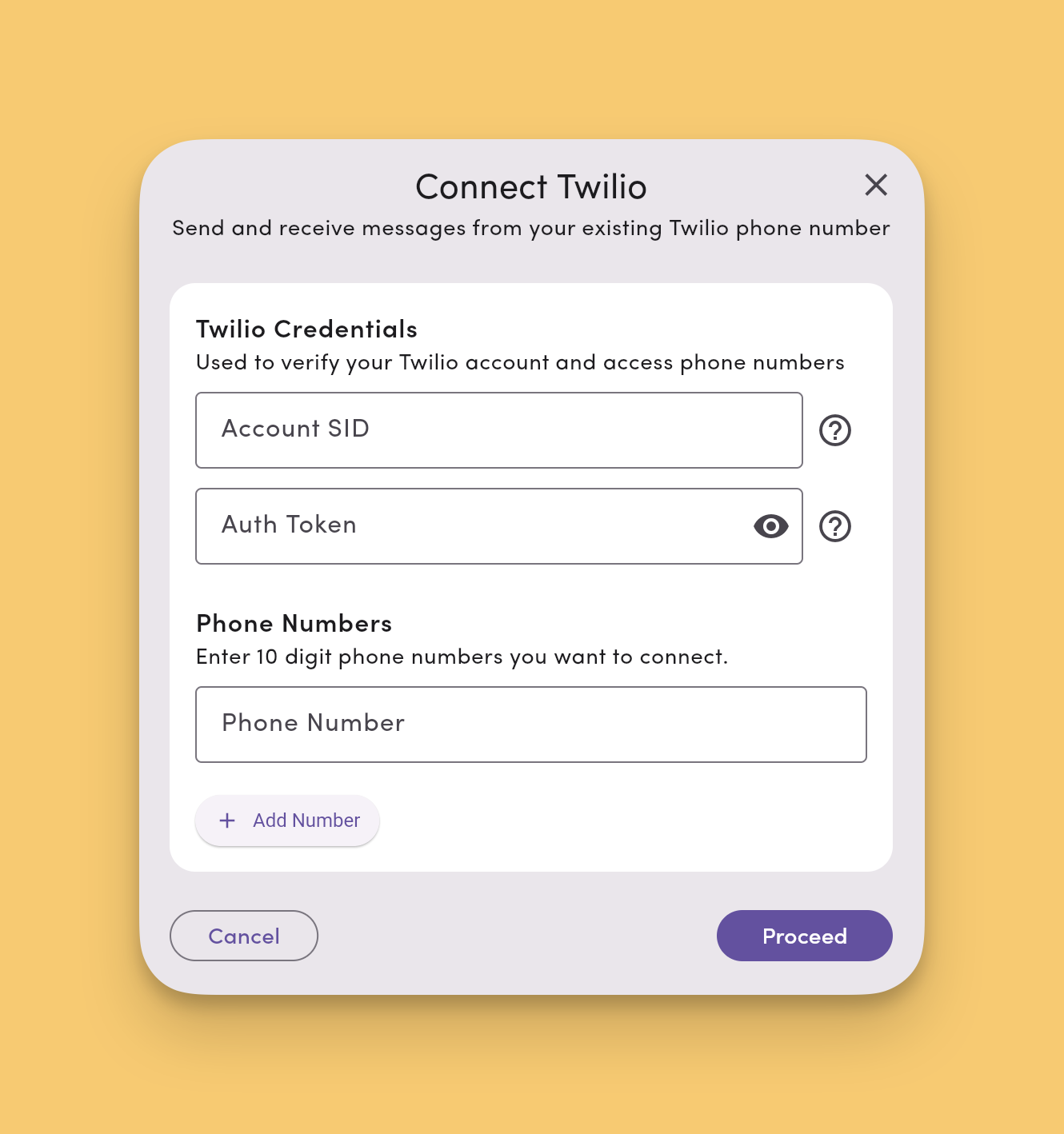
Already carrier-registered Twilio numbers carry over as-is. There's no second A2P 10DLC registration to redo, and no repeat of the rejection loop that comes with it.
Plus, day-to-day, the ops team doesn't need a developer. Not for text routing, automations, or for a message template update. You stop being the help desk for your own Flex build, and your ops team stops waiting on you to make a change.
Relays handle keyword routing and auto-assignment, labels organize conversations, and templates handle repeat replies, all from the Inbox. You can even connect up to 48 lines and split them by department, with one unified, fully exportable history.
How MessageDesk and Twilio Flex Compare
Best Twilio Flex Alternatives Compared
A quick note on how to read this list of Twilio Flex competitors. The first option is MessageDesk (the SMS-first pick). The five after it are genuine contact centers, ranked by where they fit, for teams that especially need voice.
1. MessageDesk vs Twilio Flex
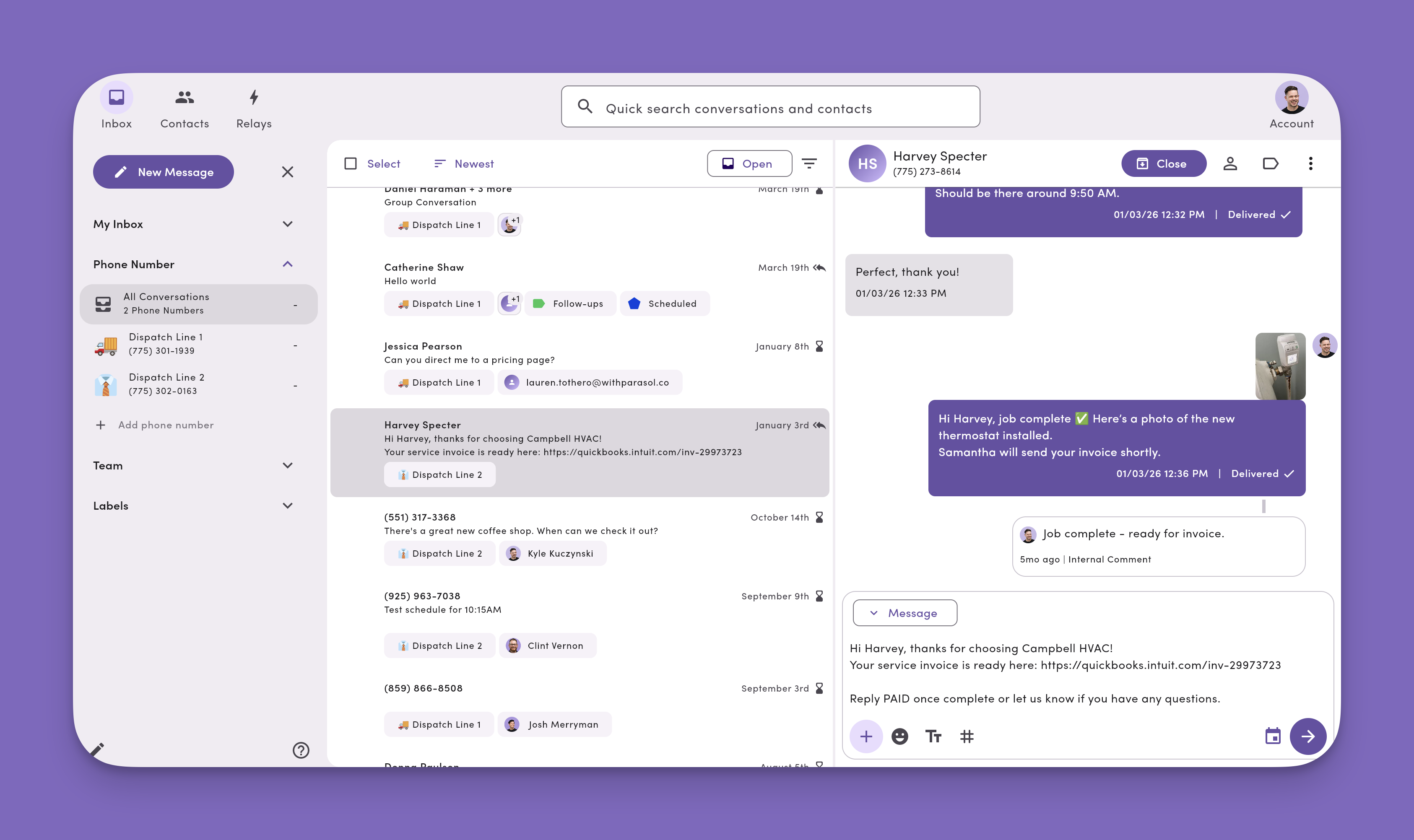
The SMS-first pick. MessageDesk turns your existing Twilio numbers into a shared team inbox, with assignment, keyword routing, labels, and templates. It also works with landlines, VoIP, toll-free or new numbers you can provision, all with no code.
Best for: teams whose job is texting, like dispatch, staffing, HR, field service, multi-location, and agencies. They want shared SMS without maintaining a contact center.
2. Amazon Connect vs Twilio Flex
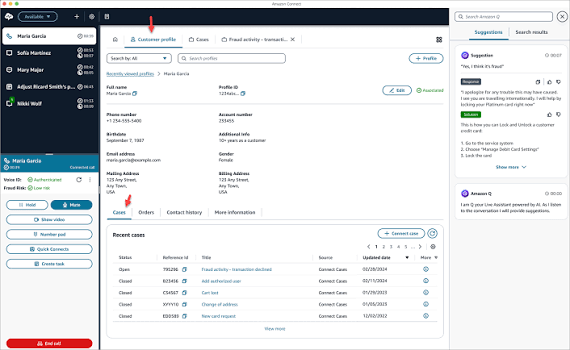
AWS's pay-as-you-go cloud contact center. You pay per minute and per message, with no per-seat licenses or long-term contracts. For anything custom, it leans on the rest of AWS, including Lambda, Lex, and Amazon's own Q and Contact Lens AI tools.
Best for: organizations already deep in AWS that want consumption-based pricing and are comfortable building.
3. Talkdesk
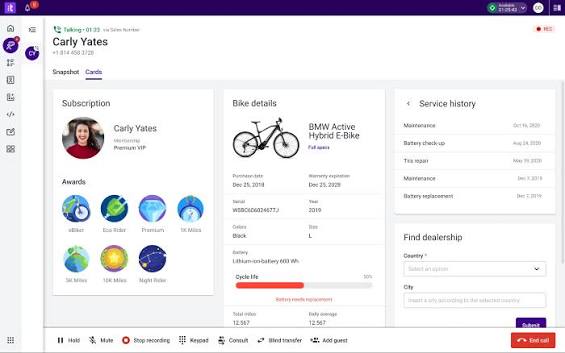
A mid-market CCaaS communication platform that's stronger out of the box than Flex, and a Leader in the 2025 Gartner Magic Quadrant for CCaaS. It covers voice plus digital channels, workforce management, and AI-assisted analytics. It deploys in weeks, with configuration over code.
Best for: mid-market service teams that want a full omnichannel contact center without building one.
4. Genesys Cloud CX vs Twilio Flex
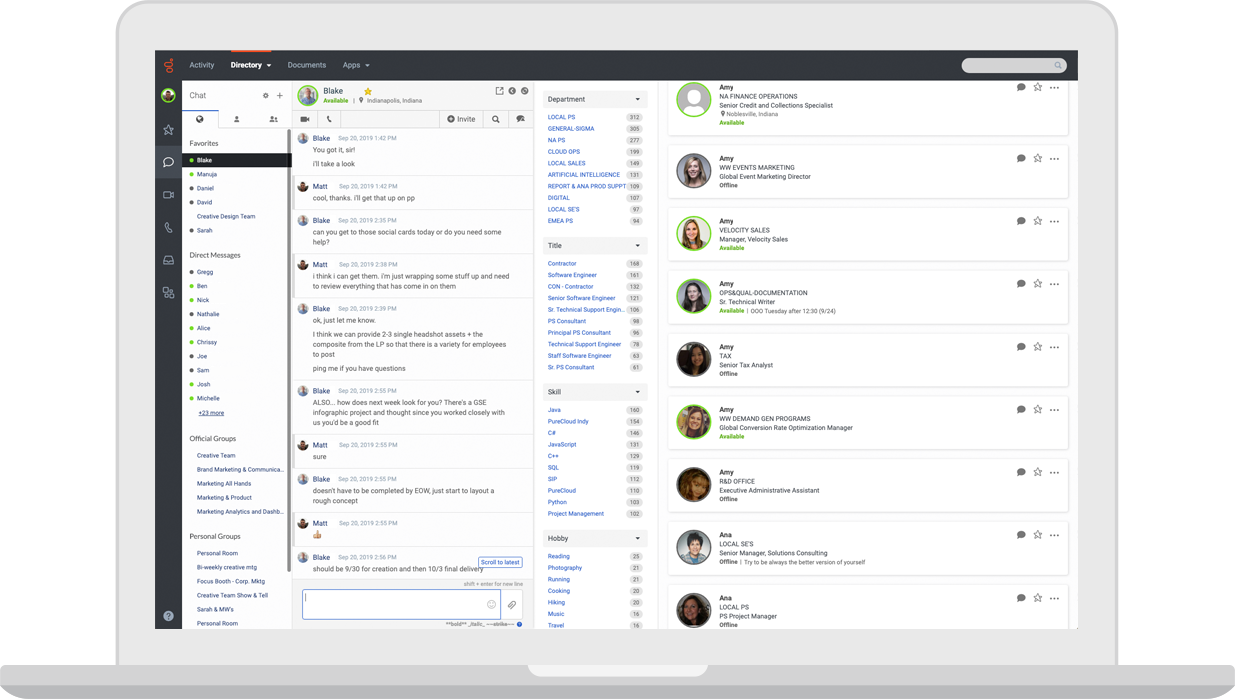
The enterprise all-in-one platform, and G2's "best overall" Twilio Flex alternative. It handles omnichannel routing across voice, chat, email, and social, with deep workforce engagement, analytics, and AI on top.
Best for: larger organizations with complex call routing, high interaction volumes, and the team to run it.
5. NICE CXone vs Twilio Flex
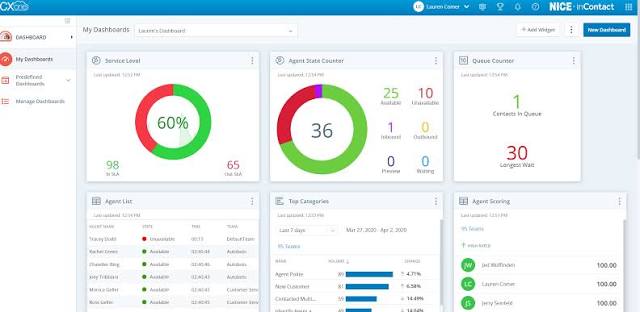
An enterprise CCaaS platform with the deepest bundled workforce management, quality management, and analytics. Enlighten AI and 100% interaction recording live in one environment.
Best for: large or regulated contact centers in finance, healthcare, or insurance. They need compliance-grade recording, QA, and workforce management under one vendor.
6. Five9 vs Twilio Flex
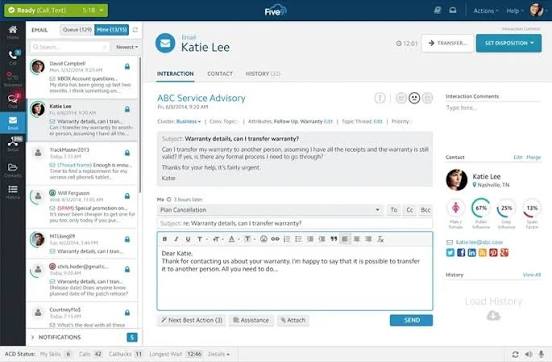
A long-established cloud contact center built around voice: predictive and power dialing, IVR, and high-reliability call handling. Digital channels and workforce optimization come on higher tiers. Put Twilio Flex vs Five9 side by side and the split is clear: Flex is build-it-yourself, Five9 is a managed voice platform.
Best for: high-volume voice operations, especially outbound and inbound calling teams.
One more category worth a mention. AI voice agents like Brilo and Ringly are an emerging, no-code option for automating inbound calls. If the job you're trying to replace is calls rather than texts, they're worth a look. If the job is texting, they're not what you need.
The pattern across all five contact centers is the same: they all serve voice-led customer operations. If shared SMS is your actual job, you're back to MessageDesk as the SMS-first pick.
How to Choose the Right Twilio Flex Alternative
Deciding whether to replace Twilio Flex, and what to replace it with, comes down to two clean paths.
Need voice routing, IVR, dialing, or workforce management? Look at Amazon Connect, Talkdesk, Genesys Cloud CX, NICE CXone, or Five9.
Weigh Amazon Connect if you're already on AWS. Talkdesk for mid-market omnichannel. Genesys, NICE, or Five9 for enterprise scale.
Set up Twilio mainly for SMS and want to stop maintaining custom code?
MessageDesk connects in minutes. Your existing Twilio setup stays intact, and the whole team gets a shared inbox from day one.
Everything else on that account keeps running too. If you want the full map of which Twilio integrations send through your numbers and where each one's replies land, that's the companion piece to this one.
The question isn't which contact center is best. It's whether you need a contact center at all. If you don't, you can stop paying and maintaining like you do.
Want to see how it fits your setup? You can talk to the MessageDesk team and we'll walk through your Twilio numbers with you.
Flex is overkill if your team just needs texting
Frequently Asked Questions
What are the best Twilio Flex alternatives?
It depends on what you need.
Need a full contact center with voice routing, IVR, and workforce management? Look at Amazon Connect, Talkdesk, Genesys Cloud CX, NICE CXone, or Five9.
Set up Twilio mainly for SMS and just need your team in one shared inbox? MessageDesk connects to your existing Twilio numbers and does that, with no code.
What is the best Twilio Flex alternative for an operations team that only texts?
MessageDesk. Dispatch, staffing, HR, field service, and multi-location teams set up Twilio to text. Then they get stuck maintaining a console nobody can reply from.
MessageDesk turns those same Twilio numbers into a shared inbox, with assignment, labels, and keyword routing. No developer, and no contact center you don't need.
What is Twilio Flex used for?
Teams use Twilio Flex to build custom cloud contact centers across voice, SMS, chat, email, and video. Engineering teams deploy it when they need full control over routing logic, the agent interface, and channel configuration. It's most common in mid-market and enterprise organizations with in-house developers.
How much does Twilio Flex cost?
Twilio Flex has two main pricing plans. A per-active-user-hour plan around $1 per hour, and a flat plan around $150 per named user per month.
Base pricing doesn't include voice, SMS, or carrier-compliance usage, so the real cost climbs with volume.
What are the hidden fees associated with Twilio Flex?
The platform fee is only the start. On top of it you pay for voice minutes, per-message SMS, A2P 10DLC compliance, storage, and recording. You also pay for any custom development to build features Flex doesn't ship. For an SMS team running at volume, the per-active-user-hour model is where costs compound fastest.
Is MessageDesk a replacement for Twilio Flex?
Not as a contact center. Twilio Flex is a full programmable cloud contact center, with voice routing, IVR, and workforce management. MessageDesk is an SMS-first team inbox.
If you need voice-first CCaaS, look at Talkdesk or Genesys. If you need shared SMS visibility with your existing setup left intact, MessageDesk fits.
Does MessageDesk support voice calling?
No. MessageDesk is built for SMS and MMS.
When you connect a landline or VoIP number, voice stays with your existing provider. Only texting routes through MessageDesk. If you need unified voice and text, look at a VoIP platform or a CCaaS tool.
Is Twilio Flex being discontinued?
No. Twilio still ships Flex UI 2.x and was named a Leader in the 2025 Gartner Magic Quadrant for CPaaS.
Specific components reach end of life on a rolling schedule. Legacy Flex SSO and Programmable Chat both hit end of life in 2026, and Twilio no longer supports older Flex UI 1.x.
If you only ever used Flex for SMS, a forced migration is the moment to ask whether you need a contact center at all.