Broadcasts & group texts
Text Everyone at Once. Handle Replies Separately.
Stop pasting the same text into 40 threads. Send a text to everyone, each reply comes back as its own conversation the team can manage.
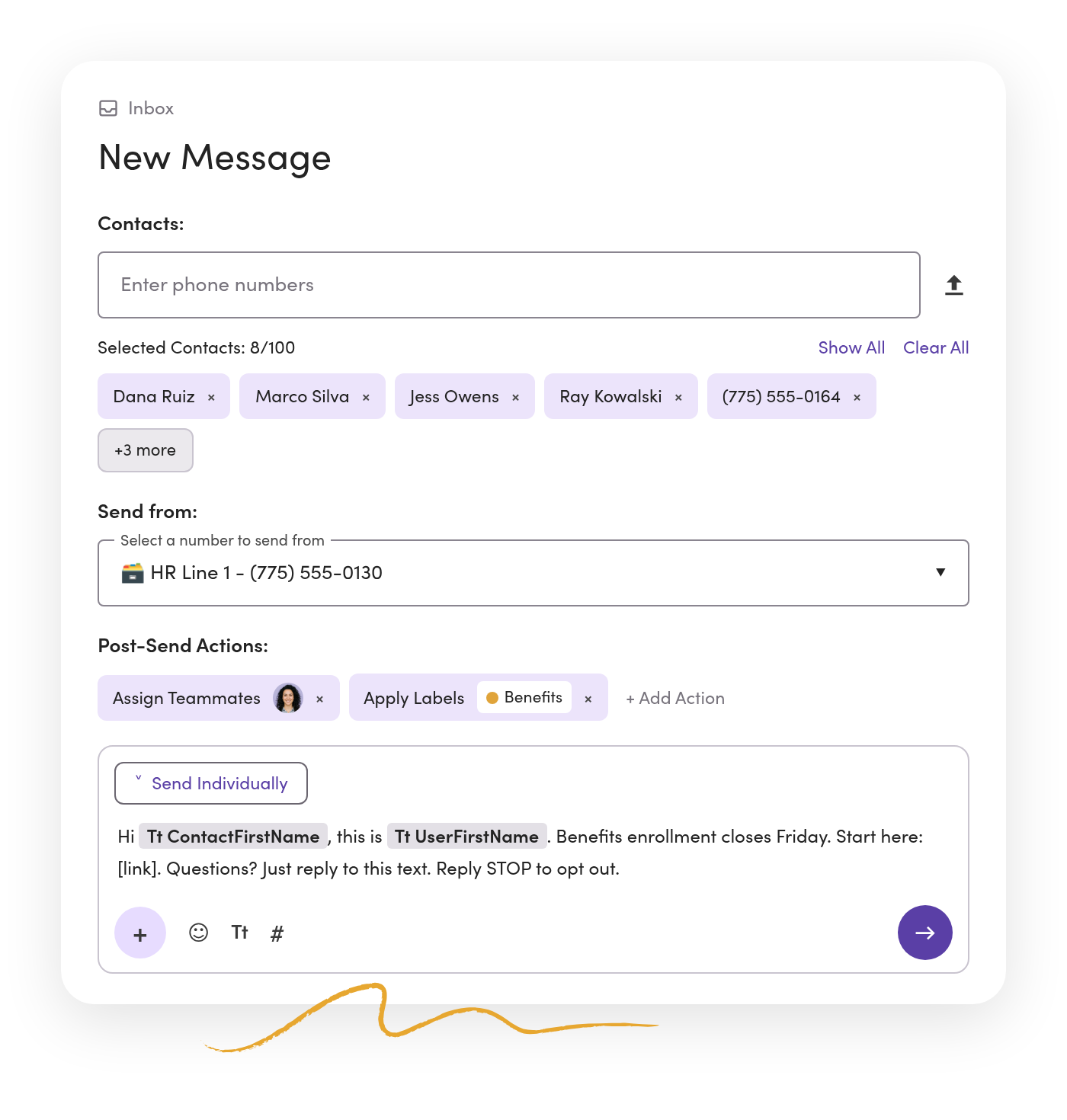
Did everyone get it?
Everyone gets their own text.
Nobody sees who else got it, and nobody gets a reply-all.
Who’s answering all these?
Every reply has an owner.
Replies come back to the shared inbox already assigned, not into someone’s personal phone.
Do I have to build my contact list again?
Your list keeps itself current.
Send to the filters and labels your team already uses. Saved filters auto-add new contacts who match.
Broadcasts vs. group texts
Do you want one conversation, or many?
People often call a broadcast a group text, so the two are easy to mix up. The message reaches the same people. What changes is who sees the replies.
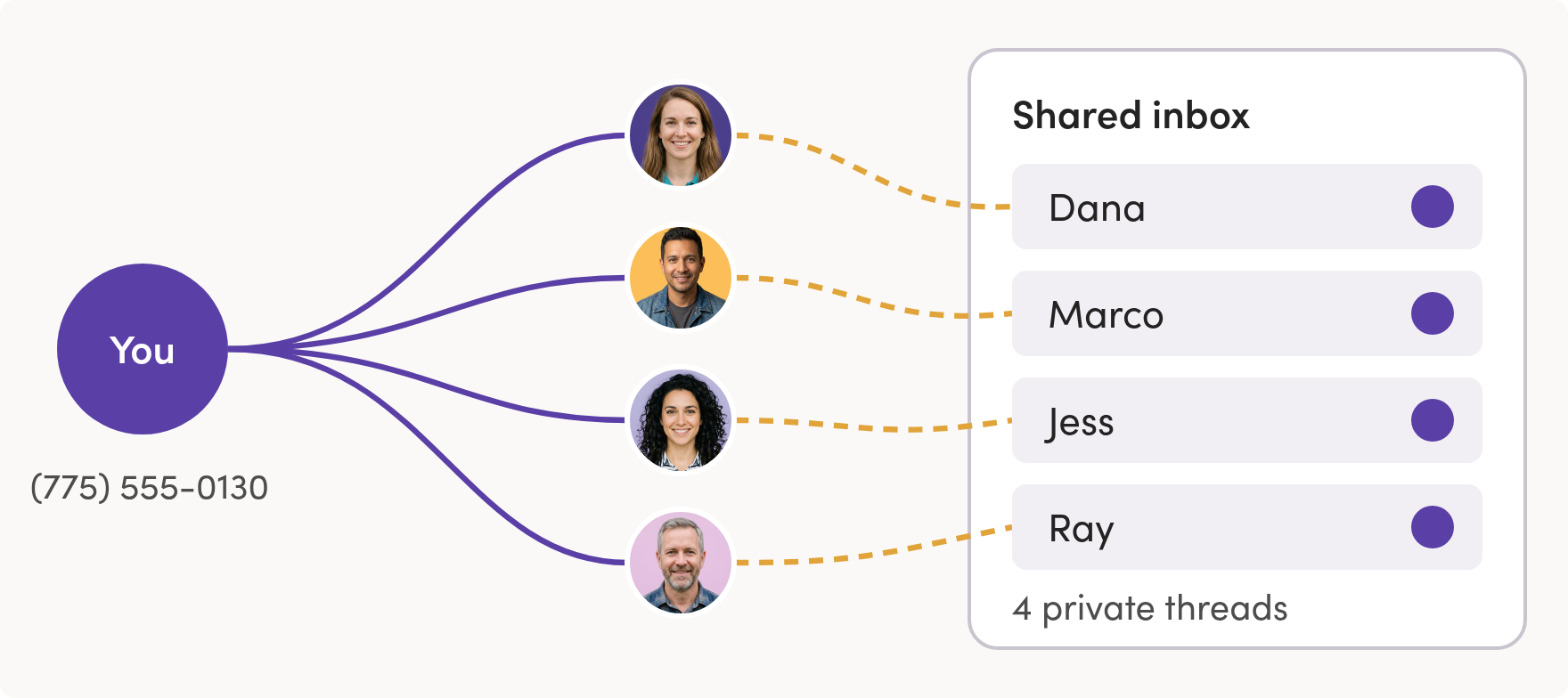
Broadcast
One message, sent to each person separately. For a shift opening, a route change, a closure notice.
Recipients never see each other
Personalization tags and templates
Auto-label and auto-assign every reply
Send now or schedule for later
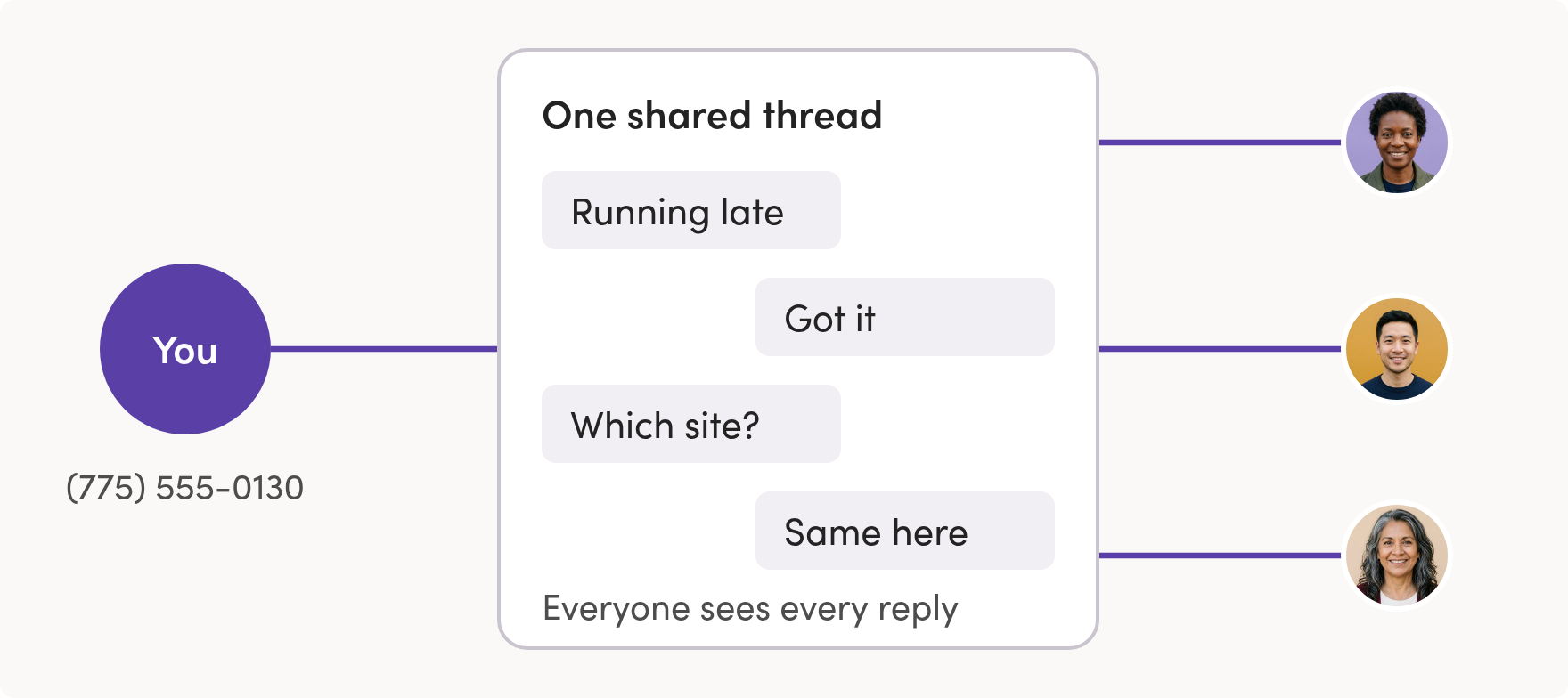
Group Text
One shared thread everybody can see. For a crew coordinating a job.
Good to know
Everyone sees every reply, and every reply alerts everyone
Hard to add or remove people once it’s started
Contact tags send their fallback. Your name and workspace tags still fill in.
Works on 10-digit numbers, not toll-free
What it looks like
A hundred texts out, a hundred individual conversations in.
Four teams, four sends. Every reply comes back as its own conversation, with someone already on it.
HR
Benefits enrollment closes Friday. The reminder goes to 80 employees, and every question goes to the benefits lead.
Field services
Tomorrow’s job schedule goes to every tech. Each one confirms in their own thread, and nobody else gets pinged.
Front desk
A weather closure notice goes to the day’s appointments. Reschedule requests come back labeled “Closure.”
Staffing
A shift opening goes to 50 available workers. The first yes comes in as its own thread; staff books it and closes the rest.
Manage replies
Replies arrive labeled and assigned.
Set it up once in the composer, and every reply arrives already sorted.
Every reply is labeled on the way in.
Set a label as a post-send action, and every conversation the broadcast creates carries it. The whole recipient list is one filter away.
Replies go to the right teammate.
Name the teammate who owns the follow-up, and replies go to them instead of a mess in the inbox that nobody owns.
Texts go out when someone can answer.
Schedule a broadcast for working hours, then review, reschedule, or cancel it from Scheduled messages.
Replies work like any other conversation in the shared inbox. See the inbox →
Organizing recipients
Your list is already built.
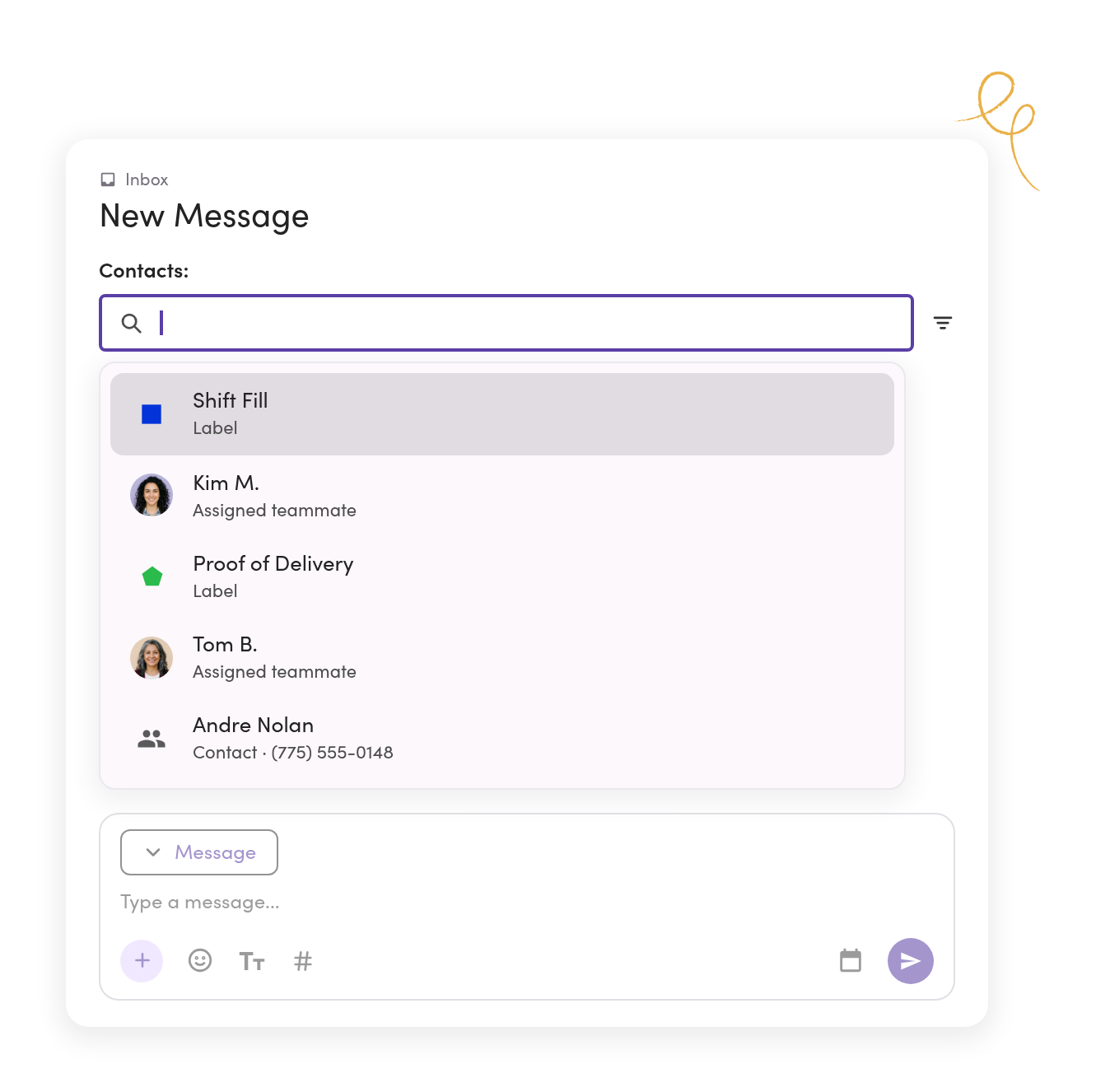
Send to the filters, labels, and teammate inboxes your team already uses.
Text everyone who matches, including people added since.
A saved filter works like a reusable contact list. See contacts →
Your labels double as send lists.
Organize the inbox once, and your audience is already there.
Reach everyone assigned to a specific teammate.
Send to the conversations assigned to one person.
Paste in or import a .csv of numbers for a one-off send.
Or search and add contacts one by one.
Templates, tags, & media
Every text sounds like you wrote it just for that person.
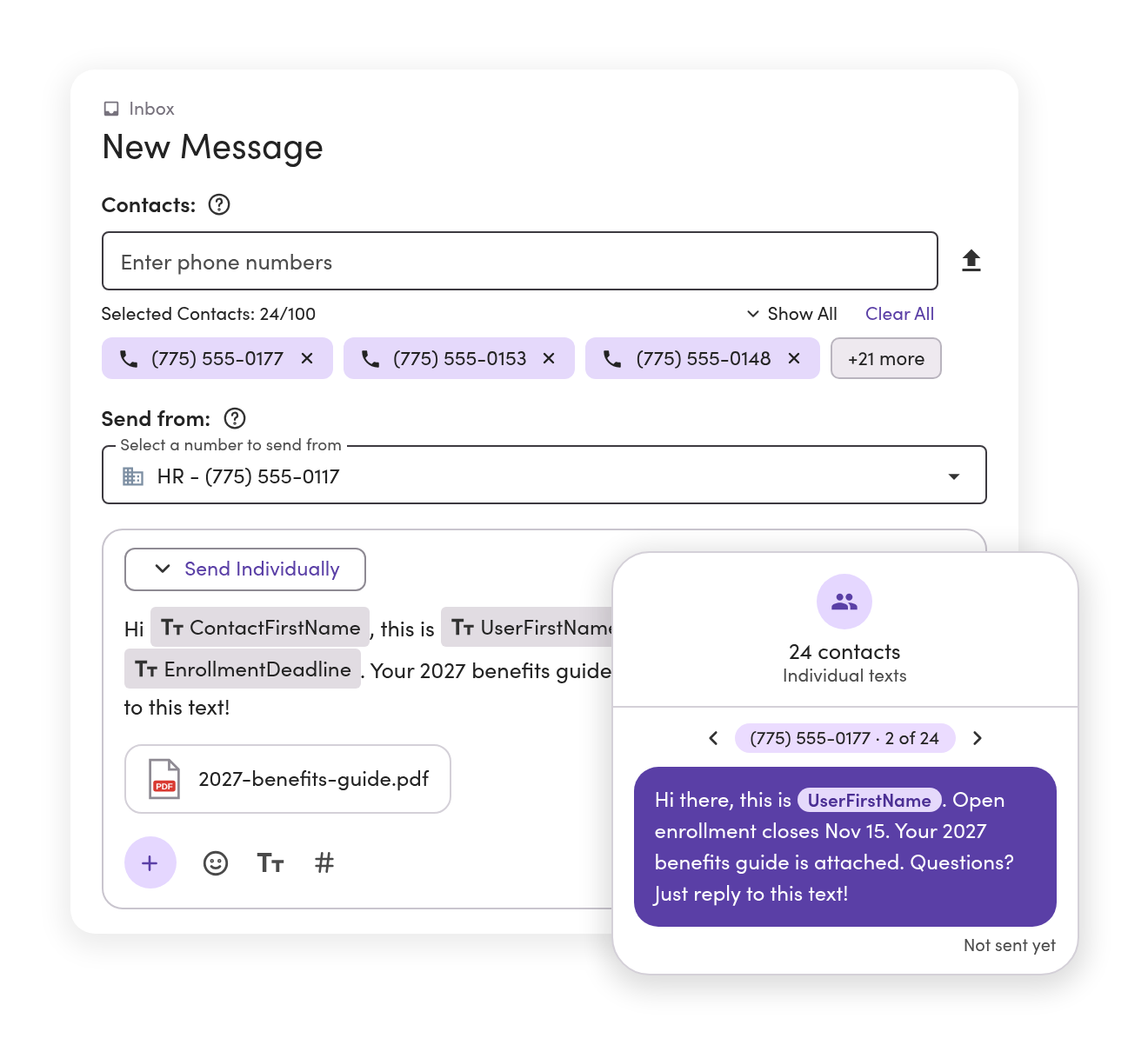
Save the wording your team keeps retyping as a template with tags that fill in each contact’s details for every broadcast.
Everyone sends the same approved wording.
Appointment reminders, benefits enrollment, delivery notifications, saved as templates the whole team can use.
Each text reads like it was written for one person.
A first name, a region, a renewal month, status. Every custom field is available as a tag.
Nobody gets a text that starts with “Hi ,”.
Set a fallback, and it fills in when the data is missing, so contacts without a first name still get a warm greeting. In a group text, everyone sees the fallback, so set one or leave contact tags out.
The photo or the PDF goes out with every text.
Attach a file once, and it sends with each text. In a group text, it’s shared into the thread.
What we’re not
We’re not a marketing blast tool.
We’re built for the texts your operations team has to send, and for every reply that comes back.
Every reply stays answerable.
Broadcasts cap at 100 contacts per send. Pro and Enterprise workspaces can ask for a higher limit.
We handle opt-outs for you.
We track every opt-out in the background and prevent sending to contacts who opted out.
Smaller lists get better results.
If you need to reach thousands at once, we’re the wrong tool.
“Calls and email don’t work for our rig workers. MessageDesk makes it easy for our HR coordinators to send texts for everything from onboarding to benefits.”
Alex S. · VP HR, Energy Services Company
Teams that use this
See how teams like yours use broadcasts.



Broadcast questions.
Not quite. A group text is one shared thread where everyone sees every reply, for up to seven people plus you. Many people say “group text” when they mean a broadcast: one message to a list, with private replies.
No. Each person gets their own copy, and their reply comes back only to your team.
No. Broadcasts are unlimited on Pro and Enterprise, up to 100 people per send.
Broadcasts are on the Pro and Enterprise plans. On Team, you’ll see individual and group messages but not broadcasts.
Images, audio, video, PDFs, and documents, up to 10 MB each. Photos over about 500 KB are compressed, and other files over that size arrive as a link. You can reuse anything in Workspace files.
A business number that’s cleared carrier registration. If you’re adding a new number, register it before you plan your first send. See phone numbers
Reach everyone. Manage all replies.
Walk through broadcasts and group texting in a 20-minute demo.